
Blog / Informative

#TipTuesday: How to Parallel Park Your Vehicle in 10 Simple Steps

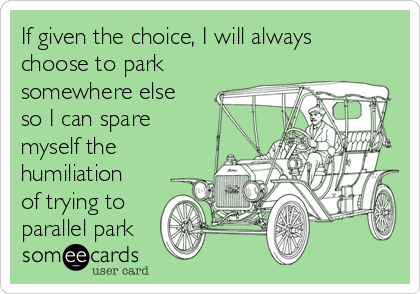
This photo has been circulating the internet lately if you can relate...please read this article so that you no longer will.

HOW TO PARALLEL PARK YOUR VEHICLE IN 10 SIMPLE STEPS!

1. Find an available spot and turn on your vehicle's blinker.

2. Make sure that you have enough space to park your vehicle (You should have at least enough room to fit 1.5 of your vehicles)

3. Pull your vehicle up parallel to the vehicle parked in front of the space you are trying to park in.

4. CHECK FOR TRAFFIC

5. Position the rear tires even with the bumper of the parked vehicle.

6. Turn the steering wheel all the way to the right.

7. Start reversing

8. Begin to straighten the wheel when your vehicle's mirrors are making a 45-degree angle with the front vehicles rear bumper.

9. Turn the wheel to the left when your car just barely clears the front car. Continue reversing until your car is parallel with the curb.

10. Straighten the wheel and pull forward.

If you are still confused or would like a visual aid watch this video: https://youtu.be/bXFmih1FVgs
 
Posted in:

Related Posts

Tips and Tricks for Driving in the Snow

Did you know that a winter storm is expected to hit Saint Clair County tonight? If you have to travel, please make sure to give yourself enough time to get where you are going and to read this article for some helpful tips and tricks when it comes to driving in the snow and how to get your vehicle unstuck if you have the misfortune of getting stuck. TIPS FOR DRIVING IN THE SNOW 1. MAKE SURE YOUR VEHICLE IS CLEAR OF ALL SNOW – VISIBILITY IS KEY. (CHECK EXHAUST PIPES) Make sure to brush off ALL snow from your vehicle. Snow left on the roof of your vehicle can cause visibility issues as it blows off. 2. DON’T USE CRUISE CONTROL During winter, road conditions can change in an instant. If your vehicle slips, it will accelerate and rapidly spin the wheels because it is trying to maintain a constant speed. 3. KEEP YOUR EYES OPEN FOR BLACK ICE Black ice is hard to spot if the road looks wet…it’s probably black ice. 4. GO SLOW It’s as simple as that, reduce your speed when driving in poor weather. 5. KEEP YOUR DISTANCE Allow more distance between vehicles. This will make it easier to stop if needed. 6. DON’T STOP If you don’t have to, don’t stop. It is easier to keep the vehicle moving than it is to get it moving when road surfaces are less than ideal. 7. POWER UP BEFORE GOING UPHILL AND DON’T STOP It is difficult to get your vehicle uphill when there is little traction. Gaining power before reaching the hill will help get you to the top. 8. STAY HOME If you can, postpone plans or stay home. For More Tips, Watch this Video: https://youtu.be/I8ORMS9TJNc TIPS FOR GETTING YOUR VEHICLE UNSTUCK 1. DON’T SPIN THE WHEELS When you are stuck and your tires are spinning, stop. Spinning the wheels will just make everything worse. 2. Gain Traction Use kitty litter or floor mats to help your vehicle’s tires gain traction. You can also put tire chains on your vehicle to prevent getting stuck if you know you are heading into extreme winter conditions. 3. Shift To Low Make sure your transmission is in the lowest gear, try to move forward until you feel the tires slip. Once you feel them slip shift in to reverse and try to leave the spot. 4. Turn off Traction Control Slipping cuts the power to the wheels. You need power in the wheels to get unstuck. Turning off traction control will allow power to go to the wheels even when the tires are slipping. 5. “Rock It” “The Classic Move” – either switch from forward to reverse, repeatedly and have the passengers in your car rock with the vehicle. 6. Call 911 or a Tow Service Depending on the situation, call 911 (Emergencies) or a tow service to help you get the vehicle unstuck. For More Tips Watch this Video: https://www.youtube.com/watch?v=Gwym1xgl7Oo Sources: https://exchange.aaa.com/safety/driving-advice/winter-driving-tips/#.XcmUkjJKjfY https://www.idrivesafely.com/driving-resources/how-to/drive-in-the-snow/ http://knowhow.napaonline.com/napa-know-notes-10-tips-get-car-unstuck/

#WednesdayWisdom: Driving Drowsy Is More Common and Dangerous than You Think

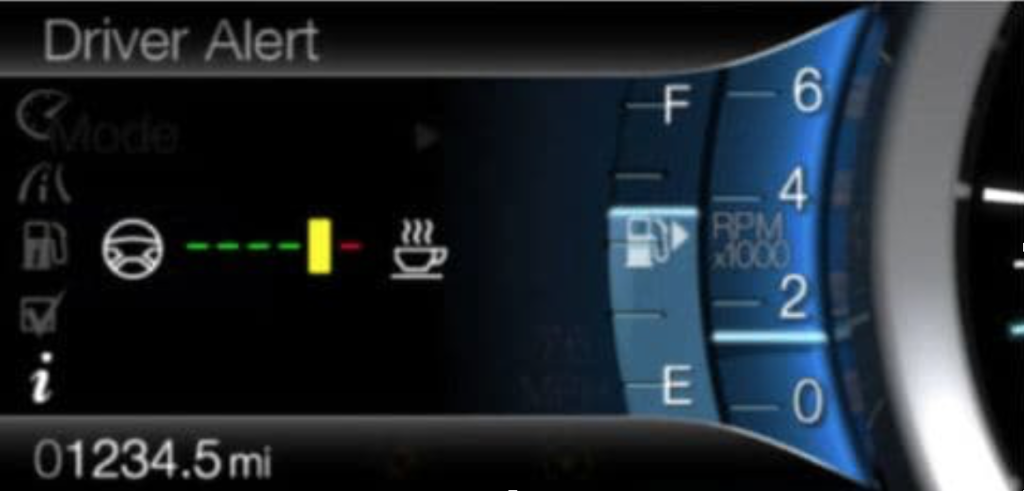
Did you know that most adults need 7-9 hours of sleep per night? With so many distractions, responsibilities, and stresses, not everyone is getting the recommended amount of sleep. According to the National Sleep Foundation (NSF), 70 million people are sleep deprived or suffer from sleep disorders. Sleep deprivation and sleep disorders not only leave people feeling drowsy throughout their day, but also causes an increase in traffic accidents. Driving after going more than 20 hours without sleep is the equivalent of driving with a blood-alcohol concentration of 0.08% - the U.S. legal limit. In 2015, the National Sleep Foundation did a study about driving drowsy and traffic accidents that yielded alarming results. According to this study, 10% (1 out of 10) of drivers have fallen asleep at the wheel in the last year, 12.5% (1 out of 8) of crashes that required hospitalization were a result of drowsy driving, and 16.5% (1 out of 6) of fatal traffic accidents were a direct result of drowsy driving. If you're unsure about whether or not you are too tired to drive, chances are, you are. According to the American Academy of Sleep Medicine, the following are signs and systems of drowsy driving: Frequent yawning or difficulty keeping your eyes open "Nodding off" or having trouble keeping your head up Inability to remember driving the last few miles Missing road signs or turns Difficulty maintaining your speed Drifting in and out of your lane In the last few years, automakers have been more aware of the hazards of drowsy driving and have worked on safety features that help prevent drowsy driving. One example of this is the lane-keeping system developed by Ford Motor Company. One feature of the lane-keeping system is the driver alert feature. The driver alert feature can sense repeated lane drifting and alert you with visual and audible signals that it might be time to pull over and take a break or grab a cup of coffee. To learn more about the lane-keeping system from Ford, schedule an appointment online or stop by and ask any sales representative at Bill MacDonald Ford! Sources: https://drowsydriving.org/2015/10/facts-about-drowsy-driving/ https://www.nsc.org/road-safety/safety-topics/fatigued-driving https://www.flickr.com/photos/74285857@N05/6697132255 https://www.ford.com/technology/driver-assist-technology/lane-keeping-system/#crossovers

FirstTimeBuyer

#MoneyMonday: First Time Buyers Program at Bill MacDonald Ford

Over the last 40 years, Bill MacDonald Ford has helped many people in the community finance their first vehicle thanks to our dedicated sales staff, Ford Credit Financing, and the First Time Buyers program. To qualify, the first-time buyer must have six months on the job or a qualified co-buyer. The first-time buyer also needs to be able to verify that their monthly income is sufficient to cover the vehicle payment, ordinary living expenses, and any currently outstanding debt. It is also required that the buyer has no previous car credit and no derogatory or negative impacts on their credit report. Ford Credit also requires that the first time buyer has a minimum down payment of $500. The first-time buyer will need to bring a valid driver's license, six complete references (name, address, phone number), their four most current pay stubs, work phone number, and their social security number. If you are looking to purchase your fist Ford vehicle and meet these requirements, please call us today to schedule a financing appointment!